


Oilfield Corrosion Inhibitor
SHANDONG ZHENGXIANG PETROLEUM TECHNOLOGY CO.,LTD
Zhengxiang company is a capably professional chemical company, located in Dongying city, the city of oil. We have a professional technical and sales team which have full experience in chemical field including many-years working experience in a global international company, and familiarity with international business, trade rules and domestic chemical industry.
Why Choose Us
Health Insurance
Strictly follow the MSDS and domestic & foreign safety and environmental protection laws and regulations, and actively implement HSE management.
Flexible and Fast Logistic Mode
Sea and land transport ("China Railway Express", other railways, trucks), joint sea-and-rail transportation. Transfer or direct. Various packaging forms.
The Most Suitable Solution
The most expensive / cheapest or best quality are not the best for every customer. Providing the most suitable solution for different customers in different countries and regions.
Excellent Technology
Adhere to self-research and development, and strong alliance with a number of universities / research institutes / professional factories.
After-sale Service
From pre-sale to after-sale, our professional service is throughout the whole process.
Social Responsibility
Protect the rights of shareholders and employees, and actively participate in social welfare activities and community activities.
-
![H2S And C2O Corrosion Inhibitor]() H2S And C2O Corrosion InhibitorThe Beyond ZX-C2-09 H2S and C2O Corrosion inhibitor is a liquid, organic, film-forming corrosion inhibitor that is oil soluble with good water dispersibility. It is most effective against H2S and...read more
H2S And C2O Corrosion InhibitorThe Beyond ZX-C2-09 H2S and C2O Corrosion inhibitor is a liquid, organic, film-forming corrosion inhibitor that is oil soluble with good water dispersibility. It is most effective against H2S and...read more -
![Gas Oil Corrosion Inhibitor]() Gas Oil Corrosion InhibitorGas Oil Corrosion InhibitorZX-C2-08 – Effective Protection for Oil & Gas Infrastructure. Our Gas Oil Corrosion Inhibitor provides effective protection for oil and gas infrastructure against...read more
Gas Oil Corrosion InhibitorGas Oil Corrosion InhibitorZX-C2-08 – Effective Protection for Oil & Gas Infrastructure. Our Gas Oil Corrosion Inhibitor provides effective protection for oil and gas infrastructure against...read more -
![Oil And Gas Transporation Piping Corrosion Inhibitor]() Oil And Gas Transporation Piping Corrosion InhibitorA high-efficiency pipeline corrosion inhibitor ZX-C2-07 designed for crude oil, natural gas, and produced water systems. It significantly reduces internal corrosion risks, extends pipeline service...read more
Oil And Gas Transporation Piping Corrosion InhibitorA high-efficiency pipeline corrosion inhibitor ZX-C2-07 designed for crude oil, natural gas, and produced water systems. It significantly reduces internal corrosion risks, extends pipeline service...read more -
![Oil Soluble Imidazoline Corrosion inhibitor]() Oil Soluble Imidazoline Corrosion inhibitorOil-soluble imidazoline corrosion inhibitors ZX-C2-06 are mainly produced through cyclic reactions of organic acids and organic amines. Their unique five-membered nitrogen-containing heterocyclic...read more
Oil Soluble Imidazoline Corrosion inhibitorOil-soluble imidazoline corrosion inhibitors ZX-C2-06 are mainly produced through cyclic reactions of organic acids and organic amines. Their unique five-membered nitrogen-containing heterocyclic...read more -
![Corrosion inhibitor for oilfield water injection]() Corrosion inhibitor for oilfield water injectionCorrosion inhibitor for injection water ZX-C2-01 is a corrosion inhibitor compounded from complex pyridine quaternary ammonium salts. It can be used to prevent corrosion of oil pipes, equipment,...read more
Corrosion inhibitor for oilfield water injectionCorrosion inhibitor for injection water ZX-C2-01 is a corrosion inhibitor compounded from complex pyridine quaternary ammonium salts. It can be used to prevent corrosion of oil pipes, equipment,...read more -
![Oil-Gas Corrosion Inhibitor]() Oil-Gas Corrosion InhibitorZX-C2-02 Oil-gas corrosion inhibitor is a water-soluble oil dispersible corrosion inhibitor, with imidazoline derivatives as its main component. It appears as a light yellow liquid, with a density...read more
Oil-Gas Corrosion InhibitorZX-C2-02 Oil-gas corrosion inhibitor is a water-soluble oil dispersible corrosion inhibitor, with imidazoline derivatives as its main component. It appears as a light yellow liquid, with a density...read more -
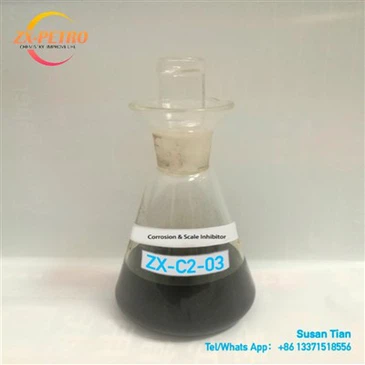
![CO2 Corrosion Inhibitor]() CO2 Corrosion InhibitorCO2 Corrosion Inhibitor ZX-C2-03 is a kind of film formation corrosion inhibitor, which is composed of home-grown composite pyridine quaternary ammonium salt as main ingredients, other synergist...read more
CO2 Corrosion InhibitorCO2 Corrosion Inhibitor ZX-C2-03 is a kind of film formation corrosion inhibitor, which is composed of home-grown composite pyridine quaternary ammonium salt as main ingredients, other synergist...read more -
![Acid Cleaning Corrosion Inhibitor]() Acid Cleaning Corrosion InhibitorZX-C2-04 Acid cleaning corrosion inhibitor is composed of quaternary ammonium salt, penetrant and some surfactant. It has wide performances and has a good inhibition performance on various metal...read more
Acid Cleaning Corrosion InhibitorZX-C2-04 Acid cleaning corrosion inhibitor is composed of quaternary ammonium salt, penetrant and some surfactant. It has wide performances and has a good inhibition performance on various metal...read more -
![Anti Corrosion and Scale Inhibitor]() Anti Corrosion and Scale InhibitorAnti Corrosion and Scale Inhibitor ZX-C2-05 is composed of alkyl pyridine type corrosion inhibitor kinds of scale inhibitors. The pyridine heterocycle compounds forms film absorbing on mental...read more
Anti Corrosion and Scale InhibitorAnti Corrosion and Scale Inhibitor ZX-C2-05 is composed of alkyl pyridine type corrosion inhibitor kinds of scale inhibitors. The pyridine heterocycle compounds forms film absorbing on mental...read more




What is the Primary Function of an Oilfield Corrosion Inhibitor?
The primary function of an oilfield corrosion inhibitor is to control the corrosive activity in oil and gas production systems, pipelines, and storage tanks. It does so by forming a protective layer over metal surfaces, preventing them from coming into direct contact with corrosive agents such as water, oxygen, and other impurities found in oil and gas. This protective layer helps to slow down or prevent the onset of corrosive damage, thereby extending the lifespan of the metal surfaces and reducing maintenance costs and potential safety hazards. Corrosion inhibitors are crucial for maintaining the integrity and efficient operation of oilfield equipment.
How Does an Oilfield Corrosion Inhibitor Work to Prevent or Slow Down Corrosion?
An Oilfield Corrosion Inhibitor works to prevent or slow down corrosion by forming a protective layer on metal surfaces that are exposed to corrosive agents. This protective layer can be composed of several components, depending on the type of inhibitor and the specific application.
Some common mechanisms by which Oilfield Corrosion Inhibitors work include:
Cathodic Protection: Inhibitors can act as cathodic protectors, preventing the formation of corrosion cells by reducing the anodic reaction rate. This mechanism involves the donation of electrons to the corroding metal surface, which reduces the driving force for corrosion.
Formation of a Passivation Layer: Certain inhibitors can form a protective layer on the metal surface, known as a passivation layer, which prevents corrosive agents from coming into direct contact with the metal. This layer can be composed of various materials, such as oxide films, hydroxides, or other compounds, depending on the inhibitor used.
Chelating Agents: Some inhibitors contain chelating agents that can bind tightly to metal ions, preventing them from participating in corrosion reactions. By complexing with the metal ions, these agents prevent them from being oxidized and thus slowing down the rate of corrosion.
Neutralization of Corrosive Agents: Oilfield Corrosion Inhibitors can also work by neutralizing corrosive agents, such as acids or dissolved oxygen, in the oil or water phase. This can be achieved through chemical reactions between the inhibitor and the corrosive agent, forming harmless products that no longer pose a threat to the metal surface.
It's worth noting that the effectiveness of Oilfield Corrosion Inhibitors can vary depending on factors such as the type and concentration of corrosive agents present, the pH of the environment, the temperature, and the specific properties of the metal surface. Therefore, selecting the appropriate inhibitor for a given application requires careful consideration of these factors.
Tips for Automating Corrosion Inhibitors In Oil And Gas
Corrosion inhibitors may be the single most important chemistry applied in the oil and gas industry. Used to protect wells, pipelines, tanks, compressors, and nearly every other kind of downhole or surface equipment, corrosion inhibitors are the backbone of a good asset integrity program designed to keep equipment failure rates at bay. Without corrosion inhibitors, oil and gas producers, transporters, and refiners would suffer tremendously.
What causes corrosion in oil and gas?
According to a recent study by the Association for Materials Protection and Performance (AMPP, previously NACE), corrosion is responsible for over $2.5 Trillion (with a "T") of loss and damages each year to the global economy. For those keeping score, that's 3.4% of global GDP.
This is simply astounding. Clearly, inhibiting corrosion is of utmost financial importance to global industry.
But what causes corrosion in oil and gas processes?
First, it's helpful to address specifically what is corrosion in oil and gas. Put simply, corrosion is the process by which refined metals, like steel, undergo a chemical reaction that causes the chemical or electrochemical deterioration of the metal.
In oil and gas processes, corrosion of metal equipment typically occurs from one of the following processes
Sweet Corrosion - metal is exposed to carbon dioxide (CO2) or oxygen (O2) when water is present
Sour Corrosion - metal is exposed to hydrogen sulfide (H2S) when water is present
Microbial Induced Corrosion (MIC) - metal is exposed to corrosive waste products, such as CO2, H2S, and acids produced by bacteria
Galvanic Corrosion - metal corrodes when exposed to other metals in an electrolyte, often impure water
In many cases, corrosion inhibitors are used to prevent these types of corrosion in oil and gas processes.
What is a corrosion inhibitor?
A corrosion inhibitor is a chemical compound designed to prevent or postpone the process of corrosion through physical or chemical means.
Corrosion inhibitors are used as a steady-state additive to oil and gas processes, meaning they are continually injected to prevent corrosion.
Corrosion inhibitors are just one way that the oil and gas industry combats corrosion. Other methods include cathodic protection, protective coatings, and appropriate material selection.
Types of corrosion inhibitors in oil and gas
In the oil and gas industry, there are 3 main types of chemistries used to inhibit corrosion:
Film-forming Corrosion Inhibitors
Film-forming corrosion inhibitors physically prevent corrosion by forming a film on the interior of a pipeline or vessel. This film repels water containing corrosive elements, preventing contact with the pipeline surface. There are many types of chemistries used in film-forming corrosion inhibitors, though azole and pyrimidine byproducts are often used. In certain cases, film-forming corrosion inhibitors can also be used to prevent the build-up of unwanted precipitates, such as scale, on pipeline internals. These are often called "mixed inhibitors" or "combination inhibitors."
Gas Scavengers
Gas scavengers, such as oxygen scavengers, carbon dioxide scavengers, and hydrogen sulfide scavengers, inhibit corrosion by chemical converting corrosive gases into non-corrosive materials through chemical interactions. These chemistries often contain triazine or various amines.
Biocides
Biocides inhibit microbial-induced corrosion (MIC) by killing and preventing the formation of bacterial colonies. Glutaraldehyde is a common biocide used in the oil and gas industry.
These three types of corrosion inhibitors are injected into oil, water, and natural gas processes to prevent equipment, pipeline, and vessel corrosion.
The challenge, of course, is figuring out how much corrosion inhibitor to inject. Because many of these chemistries can create headaches for downstream processes and refining, it's important to minimize chemical overuse. At the same time, under-injection puts assets at risk of failure.
As such, oil and gas operators and their service providers are looking for better ways to dial in injection rate calculations for corrosion inhibitors and automate treatment concentrations.
Tips for automating corrosion inhibitor injection
Because precise chemical injection of corrosion inhibitors is critical for cost reductions across all oil and gas processes, operators of all sizes should consider economic means of automating the injection of corrosion inhibitors.
Here are 3 useful tips for automating corrosion inhibitor injection in oil and gas processes.
● Use a flow meter
One of the simplest ways to minimize the waste of corrosion inhibitors while maintaining acceptable asset integrity is to use data from a real-time flow meter to inform injection rates.
In most cases, film-forming inhibitors are injected at precise concentrations into a process based on known water cuts and impurity levels in that process. Assuming these percentages remain stable, a flow meter can inform the necessary volume of corrosion inhibitors based on a prescribed concentration.
This is especially useful in processes where flow rates fluctuate considerably day-to-day, such as in saltwater disposals or produced water transfer systems.
● Measure downstream to inform future applications
One of the most common ways to ensure proper treatment levels of film-forming inhibitors is to measure chemical residuals downstream. Measuring residuals involves sampling downstream fluids to detect concentrations of corrosion inhibitors in the process.
If corrosion inhibitors are being applied in appropriate concentrations, there should be some, though minimal, residual chemistry downstream. If no residuals are present, we might assume we aren't getting complete protection. If we measure too many residuals, then we can assume we are over-treating.
Similar to residual measurement, companies should begin measuring actual corrosion in equipment downstream of corrosion inhibitor injection using corrosion probes. This process of "closing the loop" can, over time, show how effective corrosion inhibitors are at actually preventing corrosion.
The process of measuring corrosion can be challenging, of course. It can be difficult to know where to place the probes and when to take readings. In single applications, this may be of little use.
● Measure actual chemical usage
For any oil and gas operator or service provider keen on reducing the cost of corrosion and corrosion inhibitors, the above two methods can go a long way.
However, these two methods must be informed by accurate chemical usage data.
Too often, it is assumed that actual chemical dosage occurs at the prescribed rate. The after-the-fact analysis assumes that, if the pump was set to 15 GPD, then it injected 15 GPD over that time period.
In reality, this assumption is categorically false, and if relied upon will continue to confound those trying to optimize their corrosion inhibitor automation programs.
WellAware has surveyed thousands of chemical injection systems across the world. We've monitored and automated systems that have injected over 860,000 gallons of corrosion inhibitor last year.
What are the Different Types of Oilfield Corrosion Inhibitors Available ?



There are several types of Oilfield Corrosion Inhibitors available, and they differ in their chemical composition, mode of action, and effectiveness in different environments. Here are some of the common types of Oilfield Corrosion Inhibitors:
Phosphonic Acid-Based Inhibitors: These inhibitors contain phosphonic acid derivatives as the active ingredient. They form a protective layer on the metal surface and can chelate divalent and trivalent metal ions, preventing them from participating in corrosion reactions. Phosphonic acid-based inhibitors are effective in both acidic and alkaline environments and can be used in oil production and refining processes.
Amine-Based Inhibitors: Amine-based inhibitors contain organic amines as the active component. They can react with metal surfaces to form a barrier layer and can also complex with corrosive agents, thereby preventing them from causing damage. Amine-based inhibitors are commonly used in oil production and transportation systems, especially in pipelines, where they can provide long-term protection against corrosion.
Sulfonate-Based Inhibitors: Sulfonate-based inhibitors contain sulfonic acid derivatives as the active ingredient. They can adsorb onto the metal surface and form a protective film that prevents corrosive agents from reaching the metal. Sulfonate-based inhibitors are effective in acidic environments and can be used in oil production and refining processes.
Oxidized Soybean Oil (OSO)-Based Inhibitors: OSO-based inhibitors are derived from soybean oil and contain a mixture of fatty acids and esters. They can form a protective layer on the metal surface and can chelate metal ions, preventing them from participating in corrosion reactions. OSO-based inhibitors are environmentally friendly and can be used in both oil and gas production applications.
Polymer-Based Inhibitors: Polymer-based inhibitors consist of high molecular weight polymers that can adsorb onto the metal surface and form a barrier layer. They can also complex with corrosive agents, preventing them from causing damage. Polymer-based inhibitors are effective in a wide range of environments and can be used in oil production, refining, and transportation processes.
The choice of the appropriate type of Oilfield Corrosion Inhibitor depends on various factors, such as the type of metal surface to be protected, the concentration and type of corrosive agents present, the pH of the environment, and the desired level of protection. The effectiveness of different inhibitors can vary depending on the specific conditions of the application, and therefore, laboratory testing and field trials are often necessary to determine the most suitable inhibitor for a given application.
What are the Factors That Influence the Selection of an Oilfield Corrosion Inhibitor for a Specific Application?
The selection of an oilfield corrosion inhibitor for a specific application is influenced by several factors, including:
Metals and Alloys: The type of metal or alloy used in the oilfield equipment significantly impacts the choice of corrosion inhibitor. Different metals require different types of inhibitors to effectively protect against corrosive agents.
Environmental Conditions: The operating environment, such as temperature, pressure, pH levels, and the presence of specific corrosive agents, determines the suitability of a corrosion inhibitor for a particular application.
Type of Corrosion: The type of corrosion present in the system (e.g., uniform, pitting, crevice, or galvanic corrosion) influences the type of inhibitor needed to address each specific type effectively.
Compatibility: The inhibitor must be compatible with the other chemicals and materials present in the oilfield system to avoid negative interactions or reactions.
Performance Standards: The required level of protection and the desired performance standards set by industry regulations or internal company specifications guide the selection process.
Economic Considerations: The cost of the corrosion inhibitor, including the price per unit and the total cost for the expected service life, is taken into account when making a selection.
Availability and Supply Chain: The availability of the inhibitor in the local market or the reliability of the supply chain can affect its selection.
Previous Performance History: If a certain type of inhibitor has provided satisfactory performance in similar applications, there is a tendency to stick with that product.
Regulatory Compliance: Certain regions or industries may have specific regulations or guidelines that require the use of certain types of corrosion inhibitors or those with specific certifications.
Considering these factors, the oilfield operator or engineer will select the most appropriate corrosion inhibitor to ensure optimal protection and safe operation of the oilfield equipment.
The performance of an Oilfield Corrosion Inhibitor is typically evaluated through a combination of laboratory tests and field trials. Here are some of the common methods used to evaluate the performance of corrosion inhibitors:
Weight Loss Measurement: This method involves immersing a known weight of metal in a solution containing the corrosion inhibitor under test conditions. After a specified period of time, the metal is removed, cleaned, dried, and weighed again to determine the weight loss due to corrosion. The inhibitor's effectiveness is evaluated by comparing the weight loss of the metal with and without the inhibitor.
Electrochemical Testing: Electrochemical techniques such as potentiodynamic polarization and electrochemical impedance spectroscopy (EIS) can be used to measure the performance of corrosion inhibitors. These techniques involve applying a potential to the metal surface and measuring the resulting current to determine the corrosion rate and the effectiveness of the inhibitor.
Acoustic Emission Testing: Acoustic emission testing involves monitoring the sound waves generated by corrosion activity on the metal surface. The intensity and frequency of the acoustic emissions can be used to assess the effectiveness of the corrosion inhibitor.
Visual Inspection: Visual inspection of the metal surface after exposure to the corrosive environment can provide qualitative information about the effectiveness of the corrosion inhibitor. Any visible signs of corrosion or damage can indicate the need for additional protection or the selection of a more effective inhibitor.
Nondestructive Testing Techniques: Nondestructive testing techniques such as ultrasonic testing, magnetic particle inspection, or eddy current testing can be used to evaluate the internal condition of the metal structure and detect any hidden corrosion or defects.
Field Trials: Actual field trials under real-world operating conditions are often conducted to evaluate the performance of the corrosion inhibitor in the specific oilfield environment. Data collected during the field trial can provide valuable insights into the effectiveness of the inhibitor under actual conditions and help identify any potential issues or limitations.
The evaluation of an Oilfield Corrosion Inhibitor involves comparing its performance with the required standards and specifications, as well as with the performance of other inhibitors in the same class. The results of these evaluations can be used to select the most suitable inhibitor for a given application and to optimize its dosage and application conditions.
What are the Environmental Implications of Using Oilfield Corrosion Inhibitors?
The use of oilfield corrosion inhibitors can have some environmental implications due to the chemicals they contain, which may be harmful if not properly managed. These implications include:
Discharge of Contaminated Water: Corrosion inhibitors can leach into produced water or wastewater during oil and gas production, potentially contaminating surface waters or groundwater if not properly treated before discharge.
Impact on Ecosystems: The chemicals found in corrosion inhibitors could have detrimental effects on aquatic life, such as altering the pH balance or interfering with the natural biological functions of organisms.
To minimize the environmental impact, the following practices can be implemented:
Proper Handling and Disposal: Corrosion inhibitors should be handled according to strict safety protocols and disposed of through proper waste management facilities that can treat the water to remove contaminants before discharge.
Water Management: Operators should implement effective water management strategies to reduce the volume of produced water and recycle or reuse as much as possible, minimizing the need for fresh water and the discharge of treated water.
Chemical Reduction Technologies: Employing technologies that reduce the amount of chemical additives required, such as advanced materials and coatings, can help decrease the environmental footprint of corrosion inhibitors.
Environmentally Acceptable Inhibitors: Investigate and use corrosion inhibitors designed with environmentally friendly chemistries that pose less risk to ecosystems if accidentally released.
Regular Monitoring and Testing: Regularly monitor and test the wastewater for contamination, ensuring that it meets regulatory standards before being discharged.
Training and Awareness: Provide training to personnel involved in handling corrosion inhibitors to increase awareness of the potential risks and the importance of following proper handling procedures.
Collaboration with Regulatory Bodies: Work closely with environmental agencies and adhere to local regulations and international standards to ensure that the use of corrosion inhibitors is within acceptable environmental limits.
By implementing these measures, the oil and gas industry can mitigate the environmental impact of oilfield corrosion inhibitors while still protecting the integrity of oilfield assets.
Our Factory
Key employees of our company have rich experience in the chemical industry and more than 20 years of working experience in global international companies, and be familiar with international business, trade rules and domestic chemical industry.Our business has been involving many countries, widely sold in the Middle East, Central and Western Asia, Indonesia, India, Bangladesh, Russia, and other countries.


FAQ
As one of the most professional oilfield corrosion inhibitor manufacturers and suppliers in China, we're featured by quality products and competitive price. Please rest assured to buy customized oilfield corrosion inhibitor from our factory.
Oilfield Reinjection Water Corrosion Inhibitor, CI For Oil Gas Gathering and Transportation, High performance CO2 Corrosion Inhibitor