

Let me tell you, salt deposition in pipelines is a real pain in the neck for a lot of industries, especially those dealing with oil and gas. It can cause all sorts of problems like clogged pipes, reduced flow rates, and even corrosion. That's where our desalting demulsifier comes in. As a desalting demulsifier supplier, I've seen firsthand how our product can make a huge difference in preventing salt deposition.
First off, let's understand what's going on when salt deposits in pipelines. In the oil - and - gas industry, crude oil often comes out of the ground mixed with water and salts. This mixture forms an emulsion, which is basically a stable combination of two immiscible liquids (oil and water in this case). When this emulsion flows through pipelines, the salts can start to separate out and stick to the inner walls of the pipes. Over time, these salt deposits build up, causing all the issues I mentioned earlier.
So, what exactly does a desalting demulsifier do? Well, its primary job is to break that emulsion. You see, an emulsion is held together by certain forces, and the demulsifier disrupts these forces. It makes the water droplets in the emulsion come together, or coalesce. Once the water droplets are large enough, they separate from the oil phase. And since the salts are usually dissolved in the water, when the water separates, the salts go with it.
Let's talk about the science behind it a bit more. Demulsifiers work by adsorbing onto the interface between the oil and water droplets. They have special chemical structures that allow them to interact with both the oil and water. When they adsorb onto the interface, they change the surface properties of the droplets. This reduces the stability of the emulsion and makes the droplets more likely to merge.
There are different types of demulsifiers out there. For example, you've got the Anionic Flocculant. Anionic flocculants are great because they can attract positively charged particles in the emulsion. This helps in the coalescence process, making the water droplets combine more easily. The separated water can then carry the salts out of the pipeline system, preventing salt deposition.
Another type is the Reversed demulsifier. Reversed demulsifiers are used in cases where the emulsion has an unusual structure or in specific types of oil - water mixtures. They work in a similar way to regular demulsifiers but are designed to handle different emulsification conditions. They also play a crucial role in breaking the emulsion and getting rid of the salt - laden water.

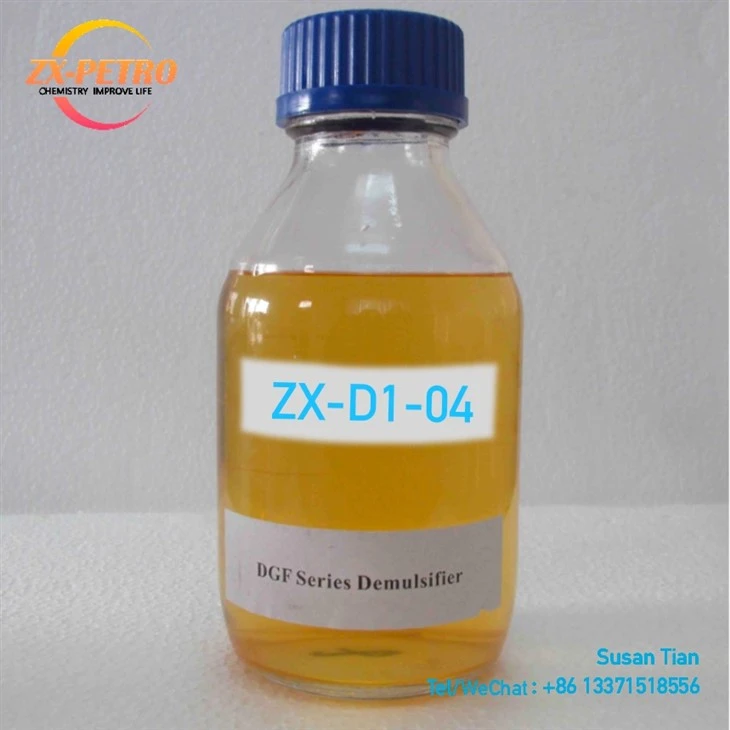
And then there's the Demulsifier for Top Oil. Top oils often have specific characteristics, like higher viscosities or unique chemical compositions. This specific type of demulsifier is formulated to work effectively with these top oils. It helps in quickly separating the water and salts from the top - quality oil, which is essential for maintaining the integrity of pipelines used in top - oil transportation.
You might be wondering how important proper demulsification is in preventing salt deposition. Well, if you don't use a good desalting demulsifier, the salt will keep building up in the pipes. This can lead to increased pressure in the pipeline as the flow is restricted. And high pressure can cause pipes to burst, which is not only extremely dangerous but also very costly to fix. Also, the salt deposits can cause corrosion. The salts can react with the metal in the pipes, leading to pitting and weakening of the pipe walls.
Now, you might be thinking, "Is it really cost - effective to use a desalting demulsifier?" The answer is a resounding yes. Yes, there's an upfront cost to purchasing the demulsifier, but think about the long - term savings. You'll avoid costly pipe replacements, reduce downtime due to pipeline blockages, and cut down on maintenance expenses. In the long run, using a good desalting demulsifier is a no - brainer.
As a desalting demulsifier supplier, we've worked with many different companies in the oil - and - gas sector. We've seen how our product has improved their operations. For example, one company was having major issues with salt deposits in their pipelines. Their flow rates were dropping, and they were constantly having to shut down the system for cleaning. After they started using our desalting demulsifier, the salt deposition reduced significantly. Their flow rates improved, and they were able to run their operations more smoothly and with fewer interruptions.
So, if you're in an industry that deals with oil - water emulsions and is facing problems with salt deposition in your pipelines, it's time to consider our desalting demulsifier. We've got a range of products to suit different needs and emulsification scenarios. Whether you're dealing with regular crude oil emulsions, top oils, or have unique emulsification challenges, we can provide the right solution.
If you're interested in learning more about our desalting demulsifiers or want to start a purchase negotiation, don't hesitate to reach out. We're here to help you find the best solution for your pipeline salt - deposition problems and make your operations more efficient.
References
- Smith, J. (2020). "The Chemistry of Demulsification in Oil - Water Systems". Journal of Petroleum Chemistry.
- Brown, A. (2021). "Preventing Salt Deposition in Pipelines: The Role of Demulsifiers". Industrial Pipeline Journal.