

Demulsification is a crucial process in various industries, especially in the oil and gas sector, where the separation of water from oil emulsions is essential for efficient production, transportation, and refining. As a demulsifier supplier, I have witnessed firsthand the significance of understanding demulsification behaviors under different pressures. In this blog post, I will delve into the intricacies of demulsification and explore how pressure can influence the performance of demulsifiers.
Understanding Demulsification
Before we discuss the impact of pressure on demulsification, let's first understand the basics of demulsification. An emulsion is a mixture of two immiscible liquids, typically oil and water, where one liquid is dispersed in the other in the form of small droplets. Emulsions can be classified as oil-in-water (O/W) or water-in-oil (W/O) depending on the continuous and dispersed phases.
Demulsification is the process of breaking down an emulsion into its individual components, allowing the oil and water to separate. This is typically achieved through the use of demulsifiers, which are chemicals designed to reduce the interfacial tension between the oil and water phases, causing the droplets to coalesce and separate.
Factors Affecting Demulsification
Several factors can influence the demulsification process, including the type and concentration of the demulsifier, the properties of the emulsion (such as droplet size, viscosity, and stability), temperature, and pressure. In this blog post, we will focus specifically on the role of pressure in demulsification.
Demulsification Behaviors under Different Pressures
The pressure at which demulsification occurs can have a significant impact on the efficiency and effectiveness of the process. Here are some key ways in which pressure can influence demulsification behaviors:
1. Droplet Coalescence
Pressure can affect the coalescence of droplets in an emulsion. According to the principles of fluid mechanics, increased pressure can lead to a decrease in the distance between droplets, increasing the likelihood of coalescence. As the pressure increases, the droplets are forced closer together, and the thin film of continuous phase between them becomes thinner. If the film breaks, the droplets coalesce into larger droplets, which are more likely to separate from the continuous phase.
However, excessive pressure can also have a negative impact on demulsification. If the pressure is too high, it can cause the droplets to become deformed or even break up, leading to the formation of smaller droplets that are more difficult to separate. Therefore, it is important to find the optimal pressure range for demulsification.
2. Interfacial Tension
Pressure can also affect the interfacial tension between the oil and water phases. Interfacial tension is a measure of the energy required to create and maintain an interface between two immiscible liquids. A lower interfacial tension allows the droplets to coalesce more easily, leading to better demulsification.
In general, increasing pressure can lead to a decrease in interfacial tension. This is because the increased pressure compresses the molecules at the interface, reducing the surface area and thus the interfacial tension. However, the relationship between pressure and interfacial tension is complex and can be influenced by other factors such as temperature and the composition of the emulsion.
3. Solubility and Partitioning
The solubility and partitioning of the demulsifier between the oil and water phases can also be affected by pressure. Demulsifiers typically work by adsorbing at the oil-water interface, where they reduce the interfacial tension and promote droplet coalescence. The solubility of the demulsifier in the oil and water phases determines its ability to reach the interface and perform its function.
In some cases, increasing pressure can increase the solubility of the demulsifier in the oil phase, allowing it to better penetrate the emulsion and reach the interface. However, this can also depend on the chemical structure and properties of the demulsifier. For example, some demulsifiers may be more soluble in water, and increasing pressure may have a different effect on their performance.
Practical Implications for Demulsifier Selection
Understanding the demulsification behaviors under different pressures is crucial for selecting the right demulsifier for a specific application. Here are some practical tips for demulsifier selection based on pressure considerations:
1. High-Pressure Applications
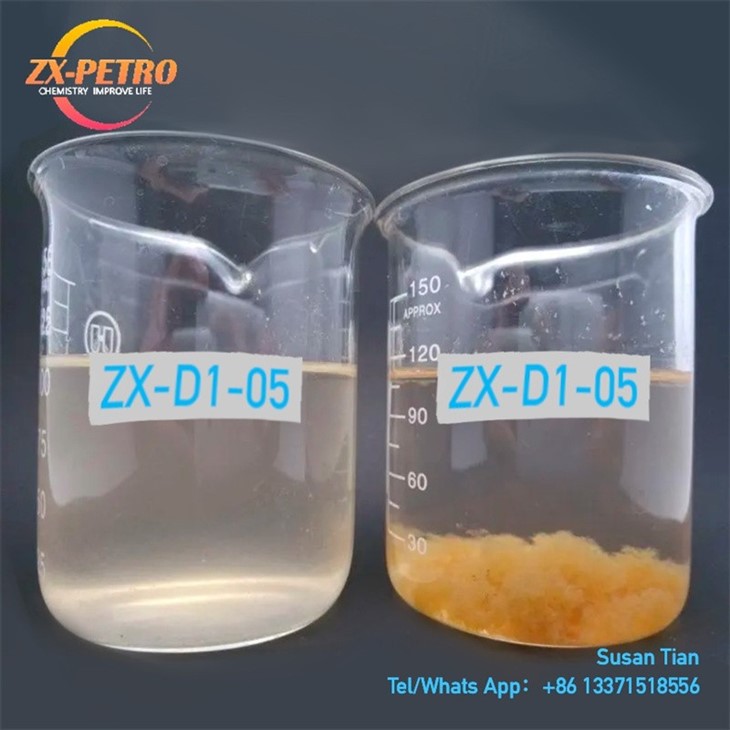
In high-pressure applications, such as deep-sea oil production or high-pressure refining processes, it is important to select a demulsifier that can withstand the high pressure and maintain its effectiveness. Look for demulsifiers that have been specifically designed for high-pressure conditions and have a proven track record of performance. For example, the Universal oil-soluble Demulsifier is a high-quality product that is suitable for a wide range of high-pressure applications.
2. Low-Pressure Applications
In low-pressure applications, such as surface oil production or low-pressure separation processes, the demulsifier requirements may be different. Demulsifiers that are more effective at lower pressures and have a lower interfacial tension may be more suitable. The Demulsifier for Top Oil is a great option for low-pressure applications, as it is designed to quickly and efficiently separate oil and water at lower pressures.
3. Variable Pressure Conditions
In some applications, the pressure may vary during the demulsification process. In such cases, it is important to select a demulsifier that can perform well under a wide range of pressure conditions. A versatile demulsifier that can adapt to different pressures and maintain its demulsification performance is essential. The Demulsifier for Top Oil is a flexible product that can be used in variable pressure conditions, providing reliable demulsification results.
Conclusion
In conclusion, the demulsification behaviors of demulsifiers under different pressures are complex and influenced by several factors. Pressure can affect droplet coalescence, interfacial tension, and the solubility and partitioning of the demulsifier, all of which can have a significant impact on the efficiency and effectiveness of the demulsification process.
As a demulsifier supplier, I understand the importance of selecting the right demulsifier for each application. By considering the pressure conditions and other factors, we can provide our customers with the most suitable demulsifiers to meet their specific needs. If you are looking for high-quality demulsifiers for your oil and gas operations, please do not hesitate to contact us for more information and to discuss your requirements. We are committed to providing you with the best solutions and excellent customer service.
References
[1] Sjoblom, J., et al. "Emulsions and emulsion stability." Handbook of Applied Surface and Colloid Chemistry, 2004.
[2] Salager, J. L. "Surfactant-based demulsifiers for water-in-oil emulsions." Advances in Colloid and Interface Science, 2006.
[3] Schramm, L. L. "Emulsions, foams, and suspensions: fundamentals and applications." Wiley-VCH, 2005.