

Hey there! As a supplier of Hydrogen Sulfide Scavenger, I've been getting a lot of questions lately about the cost - effectiveness of these products. So, I thought I'd sit down and write this blog to share some insights with you all.
First off, let's talk about what hydrogen sulfide (H2S) is and why we need scavengers. Hydrogen sulfide is a colorless, flammable, and extremely toxic gas. It has a characteristic rotten - egg smell, and even at low concentrations, it can be harmful to human health. In industrial settings, especially in the oil and gas industry, H2S is a major concern. It can cause corrosion in pipelines and equipment, leading to costly repairs and replacements. It also poses a significant safety risk to workers.

So, this is where Hydrogen Sulfide Scavengers come in. These are chemicals designed to react with H2S and remove it from a system. There are different types of scavengers available in the market, each with its own set of advantages and disadvantages.
One of the commonly used types is the Triazine desulfurizer. Triazine - based scavengers are known for their high reactivity with H2S. They can quickly neutralize the gas and form stable by - products. This means that they can be very effective in reducing H2S levels in a short period of time. However, the cost of triazine desulfurizers can be relatively high. The raw materials used in their production are expensive, and the manufacturing process also adds to the cost. But, if you're dealing with a high - concentration H2S problem where quick results are needed, the cost might be worth it.
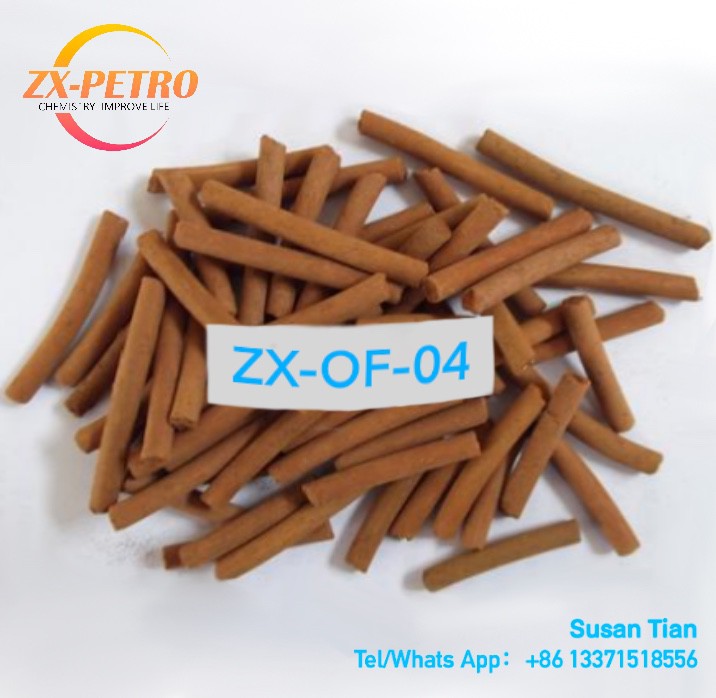
Another type is the Ferric hydroxide desulfurizer. Ferric hydroxide desulfurizers work by adsorbing H2S onto their surface. They are generally less expensive than triazine desulfurizers. The raw materials for ferric hydroxide are more readily available and cheaper to source. However, their capacity to remove H2S is limited. They need to be replaced more frequently compared to triazine desulfurizers, especially in systems with high H2S loads. So, in the long run, the cost of continuously replacing them might add up.
When it comes to cost - effectiveness, we need to consider a few factors. The first is the initial cost of the scavenger. As I mentioned earlier, different types have different price points. But the initial cost is just one part of the equation. We also need to look at the dosage rate. Some scavengers require a higher dosage to achieve the desired H2S removal, which means you'll be using more of the product over time.
Let's say you have a system with a moderate H2S concentration. You could choose a triazine desulfurizer, which might have a higher initial cost but a lower dosage rate. On the other hand, a ferric hydroxide desulfurizer might be cheaper upfront but require a higher dosage. So, you need to calculate the total cost of using each type over a specific period.
The efficiency of the scavenger is also crucial. A more efficient scavenger will remove more H2S per unit of product used. This means that you'll get better results with less product, which can save you money in the long run. For example, if a particular scavenger can remove 90% of H2S at a lower dosage compared to another that only removes 70%, the former is likely to be more cost - effective.
The compatibility of the scavenger with your system is another factor. Some scavengers might react with other chemicals in your system or cause fouling in pipelines and equipment. This can lead to additional maintenance costs. So, it's important to choose a scavenger that is compatible with your existing setup.
Now, let's talk about our Hydrogen Sulfide Scavenger. We've worked hard to develop a product that offers a great balance between cost and performance. Our scavenger has a relatively low initial cost, but it doesn't compromise on efficiency. It has a high reactivity with H2S, which means that you can achieve significant H2S removal at a lower dosage rate.
We've also made sure that our scavenger is compatible with a wide range of systems. It doesn't cause any unwanted side - reactions or fouling, which helps to keep your maintenance costs down. And we're constantly researching and improving our product to make it even more cost - effective.
In addition to the product itself, we offer excellent customer service. Our team of experts can help you determine the right type and dosage of scavenger for your specific needs. We can also provide on - site support if required. This means that you're not just buying a product; you're getting a complete solution.
If you're in the market for a Hydrogen Sulfide Scavenger, I encourage you to consider our product. We believe that it offers the best cost - effectiveness in the market. Whether you're dealing with a small - scale H2S problem or a large - scale industrial application, we have a solution for you.
If you want to learn more about our Hydrogen Sulfide Scavenger or discuss your specific requirements, don't hesitate to reach out. We're here to help you find the most cost - effective way to deal with H2S.
References
- Industry reports on Hydrogen Sulfide Scavengers
- Technical data sheets of different types of Hydrogen Sulfide Scavengers