

Well, folks, today we're diving deep into a topic that's super important in the oil and gas industry: what's the solubility of a hydrogen sulfide scavenger in oil? As a hydrogen sulfide scavenger supplier, I've seen firsthand how crucial this question is for our clients.
First off, let's talk about why hydrogen sulfide (H2S) is such a big deal in the oil business. H2S is a highly toxic gas that can cause serious health problems for workers. It's also corrosive, which means it can damage equipment and pipelines, leading to costly repairs and downtime. That's where hydrogen sulfide scavengers come in. They're chemicals designed to react with H2S and remove it from the oil, making it safer and more stable.
But here's the thing: not all hydrogen sulfide scavengers are created equal. One of the key factors that determines how well a scavenger works is its solubility in oil. If a scavenger doesn't dissolve properly in the oil, it won't be able to react with the H2S effectively, and you won't get the results you're looking for.
So, what affects the solubility of a hydrogen sulfide scavenger in oil? Well, there are a few different factors. One of the most important is the chemical structure of the scavenger. Some scavengers are more polar than others, which means they have a stronger attraction to water molecules. These polar scavengers tend to be less soluble in oil, which is a non - polar substance. On the other hand, non - polar scavengers are more likely to dissolve in oil.
Another factor is the temperature. Generally speaking, the solubility of most substances increases with temperature. So, if you're working in a high - temperature environment, you might find that your scavenger is more soluble in the oil. However, you also need to be careful because some scavengers can break down at high temperatures, reducing their effectiveness.
The composition of the oil also plays a role. Different types of oil have different chemical properties, and these can affect how well a scavenger dissolves. For example, heavy oils tend to be more viscous and contain more asphaltenes and resins, which can make it harder for a scavenger to dissolve.
Now, let's talk about some of the common types of hydrogen sulfide scavengers and their solubility in oil.

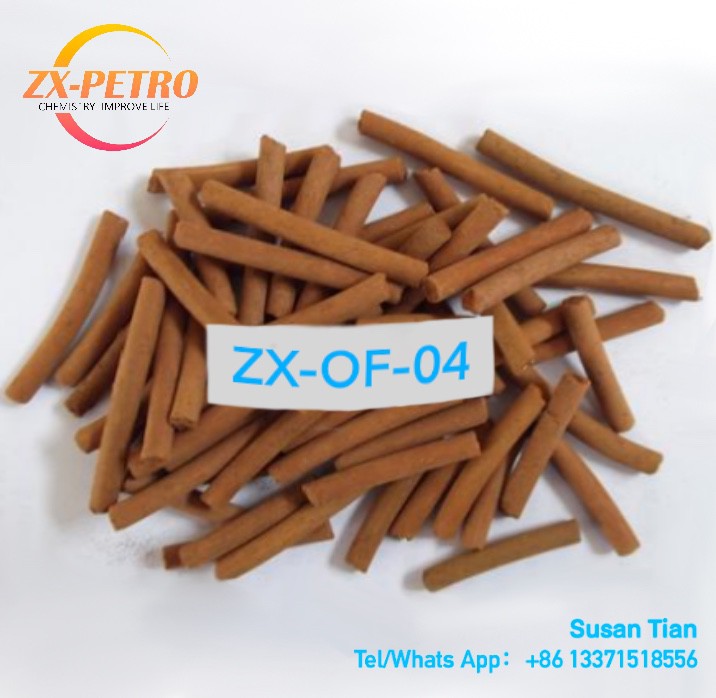
One popular type is the Ferric hydroxide desulfurizer. Ferric hydroxide desulfurizers work by reacting with H2S to form iron sulfide. They're known for their high reactivity and ability to remove large amounts of H2S. In terms of solubility in oil, they're usually not very soluble because they're inorganic compounds. They're often used in a solid form and added to the oil in a way that allows them to come into contact with the H2S gas.
Triazine desulfurizers are another common option. You can learn more about them here. These are organic compounds that are quite effective at scavenging H2S. They're more soluble in oil compared to ferric hydroxide desulfurizers because of their organic nature. They can be easily mixed with the oil, and they react with H2S to form stable compounds that can be removed from the system.
Then we have Choline Chloride 75% Liquid. Choline chloride - based scavengers are relatively new to the market, but they're gaining popularity. They have good solubility in oil, especially in lighter oils. They work by reacting with H2S to form non - toxic products, and they're also environmentally friendly.
As a supplier, we understand that choosing the right hydrogen sulfide scavenger with the appropriate solubility is crucial for your operations. We offer a range of products, and our team of experts can help you determine which one is best for your specific needs. Whether you're dealing with light or heavy oil, high or low temperatures, we have a solution that can work for you.
If you're in the market for a hydrogen sulfide scavenger, don't hesitate to reach out. We're here to help you find the best product for your situation and ensure that your oil and gas operations are safe and efficient. Contact us today to start a discussion about your requirements and how we can assist you in getting rid of that pesky hydrogen sulfide.
References
- Smith, J. (2018). "Hydrogen Sulfide Removal in the Oil and Gas Industry." Journal of Petroleum Science.
- Johnson, A. (2020). "Solubility of Chemicals in Oil and Its Impact on Oilfield Processes." Chemical Engineering Review.