

Hey there! As a supplier of Hydrogen Sulfide Scavengers, I often get asked about the adsorption capacity of these products. It's a super important topic, especially for those in the oil and gas industry, water treatment, and other sectors where hydrogen sulfide (H2S) can be a real headache. So, let's dive right in and explore what the adsorption capacity of Hydrogen Sulfide Scavengers really means.
What's Hydrogen Sulfide and Why Do We Need Scavengers?
First off, hydrogen sulfide is a colorless, highly toxic, and flammable gas with a characteristic rotten - egg smell. It can be found in natural gas, crude oil, wastewater, and some industrial processes. Not only is it extremely dangerous to human health, but it can also cause corrosion in pipelines, equipment, and storage tanks. That's where Hydrogen Sulfide Scavengers come in. They're like little superheroes that react with H2S to neutralize it and keep our operations safe and efficient.
Understanding Adsorption Capacity
The adsorption capacity of a Hydrogen Sulfide Scavenger refers to the amount of hydrogen sulfide that a specific quantity of the scavenger can remove from a given environment. It's usually measured in units like pounds of H2S per gallon of scavenger or moles of H2S per mole of scavenger. The higher the adsorption capacity, the more efficient the scavenger is at removing H2S.
Several factors can affect the adsorption capacity of these scavengers. Temperature plays a big role. Generally, as the temperature increases, the reaction rate between the scavenger and H2S speeds up, but it can also have an impact on the equilibrium of the reaction. Pressure is another factor. Higher pressures can sometimes increase the solubility of H2S in the medium, which in turn can affect how well the scavenger can adsorb it.

The concentration of H2S in the environment is also crucial. If the H2S concentration is very high, the scavenger needs to work harder and may reach its saturation point faster. The type of medium where the H2S is present, like gas or liquid, can also influence the adsorption capacity. For example, scavengers may work differently in an aqueous solution compared to a hydrocarbon - based medium.
Types of Hydrogen Sulfide Scavengers and Their Adsorption Capacities
There are several types of Hydrogen Sulfide Scavengers available in the market, each with its own unique adsorption capacity.
Choline Chloride 75% Liquid
Choline Chloride 75% Liquid is one of the popular options. It's known for its relatively high adsorption capacity and good performance in a variety of conditions. This scavenger works by reacting with H2S to form stable compounds that can be easily removed from the system. In many cases, it can adsorb a significant amount of H2S per gallon, making it a cost - effective choice for many applications.
Hydroxyl Iron Desulfurizer
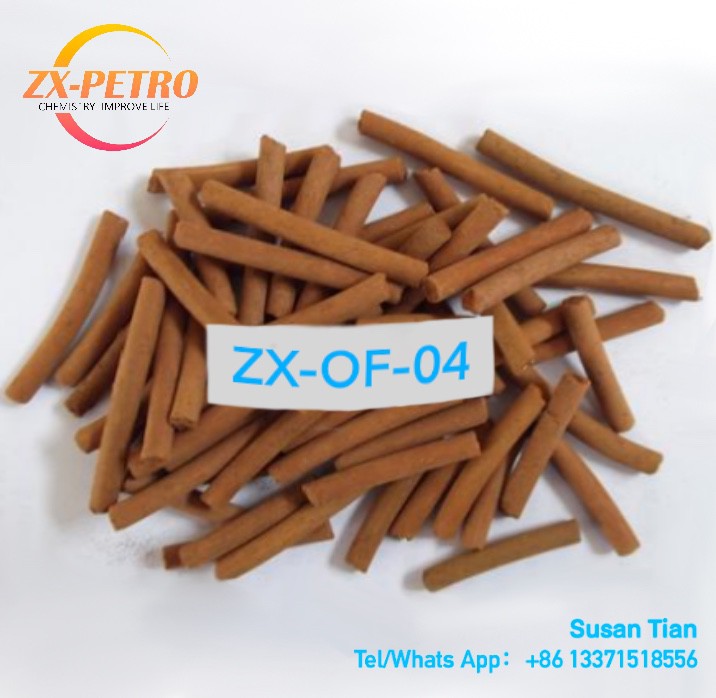
Hydroxyl Iron Desulfurizer is another great option. It has a unique mechanism of action. The iron in the desulfurizer reacts with H2S to form iron sulfide, which is a solid that can be separated from the medium. This type of scavenger often has a high adsorption capacity, especially in environments where the H2S concentration is moderately high. It's also relatively stable and can work well in different pH ranges.
Triazine H2S Scavenger
Triazine H2S Scavenger is widely used in the oil and gas industry. It has a fast reaction rate with H2S and can achieve high adsorption capacities. Triazine scavengers are effective in both gas and liquid phases and can handle a wide range of H2S concentrations. They're also known for their low toxicity and good compatibility with other chemicals used in the industry.
Measuring and Testing Adsorption Capacity
To determine the adsorption capacity of a Hydrogen Sulfide Scavenger, various testing methods are used. One common method is the laboratory - scale batch test. In this test, a known amount of the scavenger is added to a sample containing a specific concentration of H2S. The mixture is then allowed to react for a certain period of time, and the remaining H2S concentration is measured. By comparing the initial and final H2S concentrations, the amount of H2S adsorbed by the scavenger can be calculated.
Another method is the continuous - flow test. This is more representative of real - world conditions. A stream of gas or liquid containing H2S is passed through a column filled with the scavenger. The H2S concentration at the inlet and outlet of the column is monitored over time. This test can provide information about how the scavenger performs under continuous operation and can help determine its long - term adsorption capacity.
Importance of Adsorption Capacity in Real - World Applications
In real - world applications, the adsorption capacity of a Hydrogen Sulfide Scavenger is of utmost importance. In the oil and gas industry, for example, pipelines and storage facilities need to meet strict H2S content requirements. Using a scavenger with a high adsorption capacity means that less scavenger is needed to achieve the desired H2S removal, which can save costs on chemical usage and disposal.
In wastewater treatment plants, where H2S can cause odor problems and corrosion in the treatment equipment, a scavenger with good adsorption capacity can help maintain a clean and safe working environment. It can also prevent the release of H2S into the atmosphere, which is beneficial for the environment.
Choosing the Right Scavenger Based on Adsorption Capacity
When choosing a Hydrogen Sulfide Scavenger, it's essential to consider the adsorption capacity along with other factors. The type of application, the H2S concentration, the operating conditions (temperature, pressure, etc.), and the compatibility with other chemicals in the system all need to be taken into account.
If you're dealing with a high - H2S environment, a scavenger with a very high adsorption capacity like the Hydroxyl Iron Desulfurizer or Triazine H2S Scavenger might be the best choice. For applications where cost - effectiveness and good performance in a wide range of conditions are important, Choline Chloride 75% Liquid could be a great option.
Conclusion
In conclusion, the adsorption capacity of a Hydrogen Sulfide Scavenger is a key factor in determining its effectiveness. Understanding how it works, what affects it, and how to measure it can help you make informed decisions when choosing the right scavenger for your specific needs. Whether you're in the oil and gas industry, water treatment, or any other sector dealing with H2S, having a high - performing scavenger can make a big difference in the safety and efficiency of your operations.
If you're interested in learning more about our Hydrogen Sulfide Scavengers or would like to discuss your specific requirements, feel free to reach out. We're here to help you find the best solution for your H2S removal needs. Let's work together to keep your operations safe and H2S - free!
References
- Smith, J. (2018). Hydrogen Sulfide Removal Technologies. Journal of Chemical Engineering.
- Johnson, A. (2019). Adsorption Kinetics of Hydrogen Sulfide Scavengers. International Journal of Environmental Science and Technology.
- Brown, C. (2020). Comparison of Different Hydrogen Sulfide Scavengers in Oil and Gas Applications. Oil and Gas Journal.