

The extraction and processing of crude oil often involve the presence of water and salt, which can cause significant problems in downstream operations such as corrosion, fouling, and reduced efficiency of refining equipment. To address these issues, desalting demulsifiers are commonly used in the oil industry. These chemicals play a crucial role in separating water from oil and removing salts, thereby improving the quality of the crude oil. One of the key aspects of how desalting demulsifiers work is their effect on the surface properties of oil droplets. In this blog post, I'll explore this topic in detail as a desalting demulsifier supplier.
Understanding the Basics of Oil - Water Emulsions
Before delving into the impact of desalting demulsifiers on oil droplets, it's essential to understand the nature of oil - water emulsions. An emulsion is a mixture of two immiscible liquids, in this case, oil and water, where one liquid is dispersed as small droplets in the other. In crude oil, water droplets are often stabilized by natural surfactants, such as asphaltenes and resins, which adsorb at the oil - water interface. These natural surfactants form a protective film around the water droplets, preventing them from coalescing and separating from the oil phase.
The stability of an oil - water emulsion depends on several factors, including the size of the droplets, the nature of the interfacial film, and the presence of other stabilizing agents. Smaller droplets are generally more stable because they have a larger surface - to - volume ratio, which increases the influence of the interfacial forces. The interfacial film formed by natural surfactants can be highly elastic and resistant to rupture, further enhancing the stability of the emulsion.
How Desalting Demulsifiers Work
Desalting demulsifiers are designed to break the stability of oil - water emulsions and promote the coalescence of water droplets. They work by adsorbing at the oil - water interface and disrupting the protective film formed by natural surfactants. There are several mechanisms by which demulsifiers can achieve this:
- Surfactant Displacement: Demulsifiers are often surface - active agents that can compete with natural surfactants for adsorption sites at the oil - water interface. Once adsorbed, they can displace the natural surfactants, weakening the interfacial film and making it more prone to rupture.
- Interfacial Film Modification: Some demulsifiers can modify the properties of the interfacial film, such as reducing its elasticity or increasing its permeability. This can facilitate the drainage of the thin liquid film between adjacent water droplets, leading to their coalescence.
- Electrostatic Effects: In some cases, demulsifiers can alter the electrostatic properties of the oil - water interface. For example, they can neutralize the surface charge of the water droplets, reducing the electrostatic repulsion between them and promoting coalescence.
Impact on the Surface Properties of Oil Droplets
The addition of a desalting demulsifier can have several significant effects on the surface properties of oil droplets:
Surface Tension
Surface tension is a measure of the force acting at the interface between two immiscible liquids. In an oil - water emulsion, the presence of natural surfactants reduces the surface tension at the oil - water interface, which contributes to the stability of the emulsion. When a desalting demulsifier is added, it can further lower the surface tension. This reduction in surface tension makes it easier for water droplets to come into contact and coalesce. As the demulsifier adsorbs at the interface, it disrupts the orderly arrangement of the natural surfactants, leading to a decrease in the cohesive forces at the interface.
Interfacial Viscosity
Interfacial viscosity is another important property that affects the stability of oil - water emulsions. A high interfacial viscosity indicates a more rigid and elastic interfacial film, which can prevent the coalescence of water droplets. Desalting demulsifiers can reduce the interfacial viscosity by displacing the natural surfactants and disrupting the structure of the interfacial film. This allows the water droplets to deform more easily and facilitates the drainage of the thin liquid film between them, promoting coalescence.

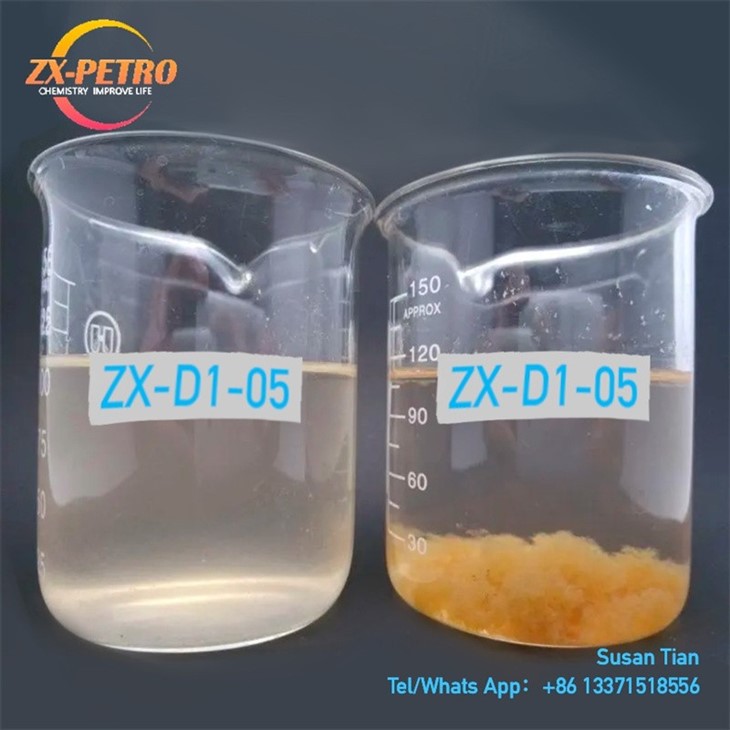
Surface Charge
The surface charge of oil droplets in an emulsion can play a crucial role in their stability. Water droplets in crude oil often carry a negative surface charge due to the adsorption of anionic natural surfactants. This negative charge creates an electrostatic repulsion between the droplets, preventing them from coming into close contact and coalescing. Desalting demulsifiers can neutralize or reduce the surface charge of the water droplets. By altering the electrostatic properties of the interface, demulsifiers can overcome the electrostatic repulsion and promote the aggregation and coalescence of the droplets.
Types of Desalting Demulsifiers and Their Effects
There are different types of desalting demulsifiers available in the market, each with its own unique properties and mechanisms of action.
Demulsifier for Top Oil
This type of demulsifier is specifically designed for use in the separation of water from the top layer of oil in a desalting process. It is often formulated to have a high affinity for the oil - water interface in the upper part of the oil phase. The Demulsifier for Top Oil can quickly adsorb at the interface, displace the natural surfactants, and reduce the surface tension and interfacial viscosity of the oil droplets in the top layer. This promotes the rapid coalescence of water droplets and their separation from the oil.
Demulsifier oil soluble type
Oil - soluble demulsifiers are dissolved in the oil phase and can diffuse to the oil - water interface. They are particularly effective in breaking stable emulsions where the natural surfactants are strongly adsorbed at the interface. The Demulsifier oil soluble type can penetrate the interfacial film and disrupt its structure from within. This leads to a significant reduction in the interfacial viscosity and an increase in the mobility of the water droplets, facilitating their coalescence.
Universal Demulsifier
As the name suggests, a Universal Demulsifier is designed to be effective in a wide range of oil - water emulsions. It can adapt to different types of crude oils and operating conditions. This type of demulsifier typically has a balanced combination of surfactant properties that allow it to displace various natural surfactants and modify the surface properties of oil droplets in different ways. It can reduce surface tension, interfacial viscosity, and surface charge, making it suitable for use in diverse desalting applications.
Factors Affecting the Performance of Desalting Demulsifiers
The performance of a desalting demulsifier in altering the surface properties of oil droplets can be influenced by several factors:
- Crude Oil Composition: Different crude oils have different compositions of natural surfactants, asphaltenes, and resins. These components can affect the adsorption behavior of the demulsifier and the stability of the oil - water emulsion. For example, crude oils with high asphaltene content may require a more powerful demulsifier to break the stable interfacial film formed by asphaltenes.
- Temperature: Temperature can have a significant impact on the performance of demulsifiers. Higher temperatures generally increase the mobility of the molecules and can enhance the adsorption of the demulsifier at the oil - water interface. However, extremely high temperatures can also cause the degradation of the demulsifier, reducing its effectiveness.
- Dosage: The amount of demulsifier added is crucial for achieving optimal performance. Insufficient dosage may not be able to break the emulsion effectively, while excessive dosage can lead to increased costs and potential problems such as foaming.
Conclusion
Desalting demulsifiers play a vital role in the oil industry by breaking the stability of oil - water emulsions and promoting the separation of water and salts from crude oil. Their ability to affect the surface properties of oil droplets, such as surface tension, interfacial viscosity, and surface charge, is central to their mechanism of action. By understanding how these demulsifiers work and the factors that influence their performance, oil producers and refiners can make more informed decisions when selecting the appropriate demulsifier for their specific applications.
If you are in the oil industry and looking for high - quality desalting demulsifiers, we are here to help. Our range of Demulsifier for Top Oil, Demulsifier oil soluble type, and Universal Demulsifier are designed to meet the diverse needs of our customers. Contact us to discuss your requirements and start a procurement negotiation.
References
- Sjoblom, J., et al. "Emulsions and emulsification." Handbook of Applied Surface and Colloid Chemistry. John Wiley & Sons, Ltd, 2003.
- Miller, C. A., and R. A. Neogi. Interfacial Phenomena: Equilibrium and Dynamic Effects. CRC Press, 2008.
- Fingas, M. "The formation and behavior of oil - in - water and water - in - oil emulsions: A review." Marine Pollution Bulletin 62.2 (2011): 241 - 252.