

Can a demulsifier for top oil remove solids from top oil?
Hey there! I'm a supplier of Demulsifier for Top Oil, and I get this question a lot. So, let's dive right in and see if a demulsifier for top oil can remove solids from it.
First off, let's understand what top oil is. Top oil usually refers to the upper layer of oil in a storage tank or during an oil - production process. It often contains water, solids, and other impurities. The presence of solids in top oil can cause a whole bunch of problems. These solids can clog pipelines, damage equipment, and reduce the overall quality of the oil.
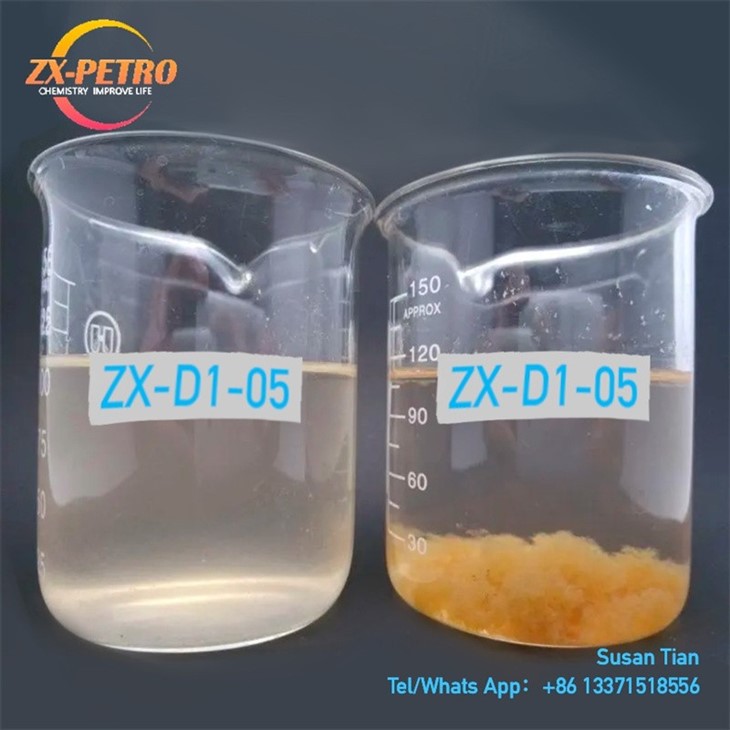

Now, a demulsifier is a chemical agent that helps separate water from oil. It works by breaking the emulsion, which is a mixture of oil and water. But can it also deal with solids?
Well, it depends on the type of demulsifier and the nature of the solids. Some demulsifiers are designed to have additional properties that can assist in the removal of solids. For example, Universal oil - soluble Demulsifier is a great option. It not only breaks the oil - water emulsion but also has some ability to interact with solids.
The way it works is that the demulsifier molecules can attach to the surface of the solids. This attachment can change the surface properties of the solids, making them more likely to either settle at the bottom or be carried away with the separated water phase.
Let's talk about the mechanism in a bit more detail. When we add a demulsifier to top oil, it first targets the oil - water interface. It reduces the surface tension between the oil and water, allowing the water droplets to coalesce and separate from the oil. At the same time, if the demulsifier has the right chemical structure, it can interact with the solids.
Some solids in top oil are inorganic, like sand and clay particles. These particles can be difficult to remove because they have different surface charges and properties. However, a well - formulated demulsifier can neutralize these charges and cause the solids to aggregate. Once they aggregate, they are easier to separate from the oil.
On the other hand, there are also organic solids, such as asphaltenes and waxes. These can form a stable emulsion with the oil and water, making it even more challenging to remove them. But a Demulsifier for Top Oil can break down these organic solids to some extent. It can disrupt the intermolecular forces that hold the organic solids together, allowing them to be removed along with the water phase.
Another factor to consider is the concentration of the demulsifier. If the concentration is too low, it may not be able to effectively break the emulsion and remove the solids. On the other hand, if the concentration is too high, it can lead to over - treatment, which can be costly and may even cause other problems.
We also have Concentrated Desalting Demulsifier. This type of demulsifier is specifically designed to deal with salts and solids in the oil. It can not only separate water from oil but also help in removing the salts and solids that are often associated with the water phase.
In some cases, the effectiveness of a demulsifier in removing solids also depends on the operating conditions. For example, temperature can play a crucial role. Higher temperatures can increase the mobility of the demulsifier molecules and the solids, making it easier for the demulsifier to interact with the solids. Pressure can also affect the separation process.
However, it's important to note that a demulsifier alone may not be able to completely remove all the solids from top oil. In some situations, additional separation processes may be required. For example, filtration can be used after the demulsification process to remove any remaining solids. Centrifugation is another option that can help in separating the solids from the oil more effectively.
In conclusion, a demulsifier for top oil can indeed help in removing solids from top oil to a certain extent. It can break the oil - water emulsion and interact with the solids to make them easier to separate. But the success of the process depends on various factors such as the type of demulsifier, the nature of the solids, the concentration of the demulsifier, and the operating conditions.
If you're in the oil industry and are facing problems with solids in your top oil, we can offer you the right demulsifier solutions. Our Demulsifier for Top Oil is designed to meet your specific needs. Whether you need to remove inorganic solids, organic solids, or both, we have the expertise and the products to help you.
If you're interested in learning more about our demulsifiers or want to discuss your specific requirements, don't hesitate to reach out. We're here to help you improve the quality of your top oil and solve any problems related to solids and emulsions.
References:
- Smith, J. (2018). "Advances in Demulsification Technology". Journal of Petroleum Science and Engineering.
- Johnson, A. (2019). "The Role of Demulsifiers in Oil - Water Separation". Oil and Gas Research Journal.