

As a supplier of Demulsifier for Top Oil, I often encounter questions from clients regarding the effectiveness of our product in reducing oil viscosity. This topic is not only of great interest to those in the oil industry but also crucial for optimizing the extraction, transportation, and refining processes. In this blog, I will delve into the science behind demulsifiers and explore whether a Demulsifier for Top Oil can indeed reduce oil viscosity.
Understanding Demulsifiers and Their Role
Demulsifiers are chemical agents designed to separate emulsions, which are mixtures of two immiscible liquids, typically oil and water. In the oil industry, emulsions can form during the extraction, transportation, and refining processes. These emulsions can cause various problems, such as increased viscosity, corrosion, and reduced efficiency in separation equipment.
Our Demulsifier for Top Oil is specifically formulated to break down the emulsions present in top oil, which is the lighter fraction of crude oil. By breaking the emulsion, the demulsifier allows the oil and water to separate more easily, improving the quality of the oil and reducing the potential for damage to equipment.
The Relationship Between Emulsions and Oil Viscosity
Emulsions can significantly increase the viscosity of oil. When water droplets are dispersed in oil, they create a complex structure that resists flow. This is because the water droplets act as obstacles, impeding the movement of the oil molecules. As a result, the oil becomes thicker and more difficult to pump and process.
By using a Demulsifier for Top Oil, we can break down the emulsion and separate the oil and water. This process reduces the number of water droplets in the oil, which in turn reduces the viscosity. As the oil becomes less viscous, it flows more easily, improving the efficiency of the extraction, transportation, and refining processes.
How Demulsifiers Work to Reduce Viscosity
Demulsifiers work by disrupting the interfacial film that stabilizes the emulsion. This film is composed of surfactants, which are molecules that have both hydrophilic (water-loving) and hydrophobic (oil-loving) properties. The surfactants adsorb at the oil-water interface, creating a stable film that prevents the water droplets from coalescing.
Our Demulsifier for Top Oil contains molecules that are designed to compete with the surfactants in the emulsion. These molecules have a higher affinity for the oil-water interface, and they displace the surfactants, breaking the interfacial film. Once the film is broken, the water droplets can coalesce and separate from the oil.
In addition to breaking the emulsion, our demulsifier can also reduce the viscosity of the oil by interacting with the oil molecules themselves. The demulsifier molecules can adsorb onto the surface of the oil molecules, reducing the intermolecular forces between them. This makes the oil molecules more mobile, reducing the viscosity of the oil.
Scientific Evidence Supporting Viscosity Reduction
Numerous studies have demonstrated the effectiveness of demulsifiers in reducing oil viscosity. For example, a study published in the Journal of Petroleum Science and Engineering investigated the use of a demulsifier in a heavy oil emulsion. The researchers found that the demulsifier significantly reduced the viscosity of the emulsion, improving the flow properties of the oil.
Another study, published in the Energy & Fuels journal, examined the effect of a demulsifier on the viscosity of a crude oil emulsion. The results showed that the demulsifier not only separated the oil and water but also reduced the viscosity of the oil phase. This reduction in viscosity was attributed to the disruption of the emulsion and the interaction of the demulsifier with the oil molecules.
Our Product Portfolio
At our company, we offer a range of demulsifiers to meet the specific needs of our clients. Our Refinery Desalting Demulsifier is designed to remove salt and water from crude oil during the desalting process. This demulsifier is highly effective in breaking down emulsions and reducing the viscosity of the oil, improving the efficiency of the desalting unit.
Our Oxalkylated Resin Demulsifier is a high-performance demulsifier that is suitable for a wide range of applications. This demulsifier is based on an oxalkylated resin technology, which provides excellent emulsion-breaking properties and viscosity reduction.
We also offer a Universal Demulsifier that can be used in various oilfield applications. This demulsifier is formulated to be effective in different types of emulsions and can provide significant viscosity reduction.
Conclusion
In conclusion, a Demulsifier for Top Oil can indeed reduce oil viscosity. By breaking down the emulsion and separating the oil and water, the demulsifier reduces the number of water droplets in the oil, which in turn reduces the viscosity. Additionally, the demulsifier can interact with the oil molecules themselves, reducing the intermolecular forces and making the oil more mobile.
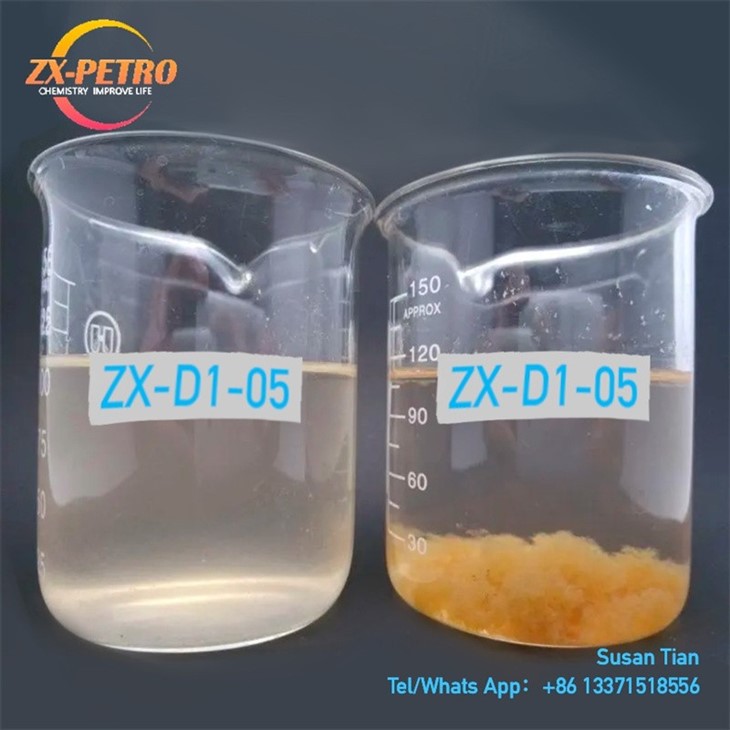

Our company is committed to providing high-quality demulsifiers that can effectively reduce oil viscosity and improve the efficiency of the oil industry. If you are interested in learning more about our products or have any questions regarding the use of demulsifiers, please feel free to contact us. We look forward to the opportunity to discuss your specific needs and provide you with the best solutions.
References
- Journal of Petroleum Science and Engineering - Study on the use of demulsifier in heavy oil emulsion.
- Energy & Fuels journal - Effect of demulsifier on the viscosity of crude oil emulsion.