

Can reverse demulsifiers be used in oilfield produced water treatment?
As a supplier of reverse demulsifiers, I often encounter inquiries about the applicability of these products in oilfield produced water treatment. In this blog post, I'll explore this topic in depth, discussing the science behind reverse demulsifiers, their effectiveness in treating oilfield produced water, and the types of reverse demulsifiers available.
Understanding Reverse Demulsifiers
Reverse demulsifiers, also known as water - soluble demulsifiers, are chemicals designed to break emulsions. Emulsions are mixtures of two immiscible liquids, typically oil and water, where one liquid is dispersed as droplets in the other. In the context of oilfields, oil - in - water emulsions are common in produced water. These emulsions are stabilized by natural surfactants, fine solids, and other components present in the oil and water mixture.

Reverse demulsifiers work by adsorbing onto the surface of the oil droplets in the emulsion. They disrupt the interfacial film that stabilizes the droplets, causing them to coalesce. Once the oil droplets have coalesced into larger droplets, they can separate from the water phase more easily due to gravity.
The Need for Oilfield Produced Water Treatment
Oilfield produced water is the water that comes to the surface along with crude oil during the extraction process. It contains various contaminants, including oil, suspended solids, dissolved salts, and heavy metals. If this water is not treated properly before disposal or reuse, it can cause environmental pollution and damage to equipment.
Treating oilfield produced water is crucial for several reasons. Firstly, it helps to meet environmental regulations, which often limit the amount of oil and other pollutants that can be discharged into the environment. Secondly, treated water can be reused in the oilfield for activities such as enhanced oil recovery, reducing the need for fresh water intake.
Using Reverse Demulsifiers in Oilfield Produced Water Treatment
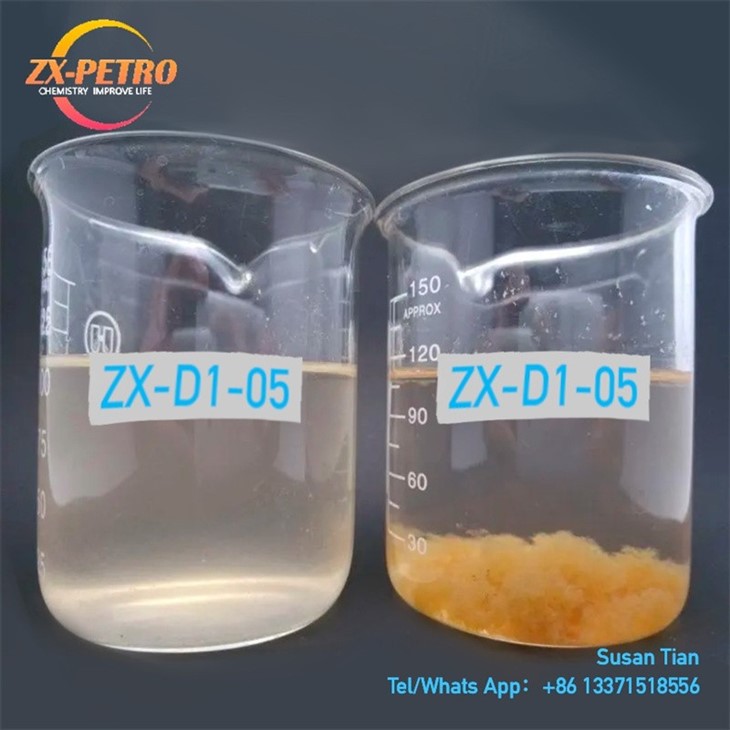
Reverse demulsifiers can be highly effective in treating oilfield produced water. Their water - soluble nature allows them to mix easily with the water phase of the emulsion, where they can target the oil droplets. When added to the produced water, reverse demulsifiers quickly start to break the oil - in - water emulsion.
One of the key advantages of using reverse demulsifiers is their ability to handle a wide range of oil - in - water emulsions. Different oilfields produce water with varying characteristics, such as oil content, salinity, and the presence of different types of surfactants. Reverse demulsifiers can be formulated to be effective in different conditions, making them a versatile solution for produced water treatment.

In addition, reverse demulsifiers can be used in combination with other treatment processes. For example, they can be used upstream of a flotation unit. The demulsifier breaks the emulsion, and then the flotation unit can more effectively remove the separated oil droplets from the water.
Types of Reverse Demulsifiers
There are several types of reverse demulsifiers available, each with its own unique properties and applications.
- Oil Soluble Demulsifier: Although we are mainly discussing reverse (water - soluble) demulsifiers, oil - soluble demulsifiers Oil Soluble Demulsifier also play a role in some cases. They are typically used in water - in - oil emulsions, but in certain situations where there is a complex mixture of emulsions in the produced water, they can be used in combination with reverse demulsifiers to achieve better separation.
- Extra Thick Crude Oil Demulsifier: When dealing with oilfields that produce extra - thick crude oil, special demulsifiers are required. Extra Thick Crude Oil Demulsifier is formulated to handle the high - viscosity oil droplets in the produced water. These demulsifiers have strong emulsification - breaking capabilities and can quickly separate the thick oil from the water.
- Universal Demulsifier: A Universal Demulsifier is designed to be effective in a wide range of conditions. It can handle different types of oils, salinities, and water chemistries. This type of demulsifier is very useful for oilfields where the produced water characteristics can vary over time or for treatment facilities that process water from multiple oilfields.
Factors Affecting the Performance of Reverse Demulsifiers
Several factors can affect the performance of reverse demulsifiers in oilfield produced water treatment.
- Temperature: The temperature of the produced water can have a significant impact on the demulsification process. Higher temperatures generally increase the mobility of the oil droplets and the rate of coalescence. However, some demulsifiers may lose their effectiveness at very high temperatures, so it's important to choose a demulsifier that is stable within the temperature range of the produced water.
- pH: The pH of the produced water can also influence the performance of reverse demulsifiers. Different demulsifiers have different optimal pH ranges. For example, some demulsifiers work better in slightly acidic conditions, while others are more effective in alkaline environments.
- Oil Content and Type: The amount and type of oil in the produced water are crucial factors. Higher oil content may require a higher dosage of the demulsifier. Different types of oils, such as light crude oil and heavy crude oil, have different physical and chemical properties, which can affect the demulsification process.
Case Studies
To illustrate the effectiveness of reverse demulsifiers in oilfield produced water treatment, let's look at a few case studies.
In an offshore oilfield, the produced water had a high oil content and was stabilized by a complex mixture of natural surfactants. After adding a custom - formulated reverse demulsifier, the oil - water separation efficiency increased significantly. The treated water met the environmental discharge standards, and the separated oil could be further processed for recovery.
In another on - shore oilfield, the produced water had a high salinity and a relatively low temperature. By using a reverse demulsifier specifically designed for high - salinity and low - temperature conditions, the oil - in - water emulsion was effectively broken, and the treated water was reused in the enhanced oil recovery process.
Conclusion
Reverse demulsifiers can indeed be used in oilfield produced water treatment, and they offer a practical and effective solution for breaking oil - in - water emulsions. With their ability to handle different types of emulsions and be customized for various conditions, they are a valuable tool in the oil and gas industry.
Whether you are dealing with a simple or complex oil - in - water emulsion in your oilfield produced water, there is likely a reverse demulsifier that can meet your needs. Our company offers a wide range of reverse demulsifiers, including Oil Soluble Demulsifier, Extra Thick Crude Oil Demulsifier, and Universal Demulsifier.
If you are interested in learning more about our reverse demulsifiers or discussing your specific oilfield produced water treatment requirements, we invite you to contact us for a detailed consultation and to start a procurement discussion.
References
- SPE (Society of Petroleum Engineers) publications on produced water treatment
- Journal of Petroleum Science and Engineering articles related to demulsification processes
- Industry reports on oilfield chemicals and their applications