

Hey there! As a supplier of Hydrogen Sulfide Scavenger, I've been getting a bunch of questions lately about whether there are any compatibility issues between our Hydrogen Sulfide Scavenger and other additives. So, I thought I'd sit down and write this blog to share some insights on this topic.
First off, let's talk a bit about what Hydrogen Sulfide Scavenger is and why it's so important. Hydrogen sulfide (H2S) is a highly toxic and corrosive gas that can cause serious problems in various industries, especially in the oil and gas sector. It can damage equipment, pose health risks to workers, and even lead to environmental pollution. That's where our Hydrogen Sulfide Scavenger comes in. It's designed to react with H2S and remove it from the system, making everything safer and more efficient.
Now, when it comes to compatibility with other additives, it's not a one - size - fits - all situation. Different additives have different chemical properties, and these properties can interact in various ways.
Let's start with the Triazine H2S Scavenger. Triazine - based scavengers are quite popular because they're effective at removing H2S. In most cases, our Hydrogen Sulfide Scavenger can work well with Triazine H2S Scavenger. Both are designed to target H2S, and they usually don't interfere with each other's chemical reactions. However, it's still a good idea to do some small - scale tests before using them together on a large scale. This is because the specific formulation of each product might have some unique characteristics that could potentially cause issues under certain conditions.
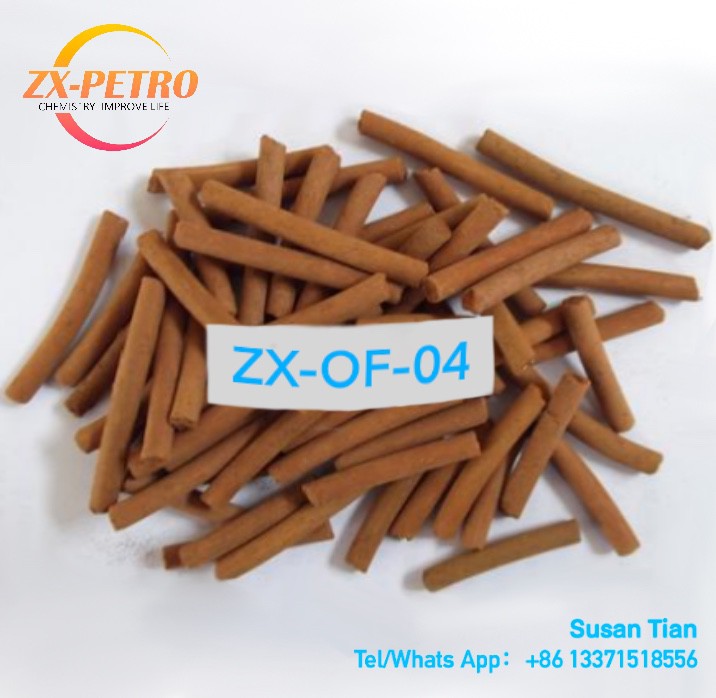
Another common additive in the oil and gas industry is the Hydroxyl Iron Desulfurizer. Hydroxyl iron desulfurizers work by binding with sulfur compounds. When considering using our Hydrogen Sulfide Scavenger along with a Hydroxyl Iron Desulfurizer, we need to be a bit more cautious. The chemical reactions involved in both products can be complex, and there's a possibility that they might compete for the same sulfur - containing molecules. This could lead to reduced efficiency of either or both products. For example, if the iron in the desulfurizer reacts with the sulfur before our scavenger has a chance to do its job, the scavenger might not be as effective as it should be.
There are also other types of additives like corrosion inhibitors, scale inhibitors, and demulsifiers that are commonly used in oil and gas operations. Corrosion inhibitors are used to protect metal surfaces from corrosion, scale inhibitors prevent the formation of scale deposits, and demulsifiers help separate oil and water. Our Hydrogen Sulfide Scavenger can generally be compatible with these additives, but again, it depends on the specific formulations.

For corrosion inhibitors, most of the time, there won't be any major compatibility issues. Our scavenger is mainly focused on removing H2S, while corrosion inhibitors work on the metal - fluid interface. However, if the corrosion inhibitor contains certain chemicals that could react with the components of our scavenger, it could cause problems. For example, some sulfur - containing corrosion inhibitors might interfere with the reaction of our scavenger with H2S.
Scale inhibitors are designed to prevent the precipitation of salts in the system. In most cases, they don't interact directly with our Hydrogen Sulfide Scavenger. But if the scale inhibitor changes the pH or the ionic strength of the solution, it could potentially affect the performance of our scavenger. This is because the chemical reactions of our scavenger are often pH - and ionic - strength - dependent.
Demulsifiers are used to break the emulsion of oil and water. They usually work by reducing the surface tension between the two phases. Our Hydrogen Sulfide Scavenger is typically not directly involved in the demulsification process. However, if the demulsifier contains chemicals that can react with the scavenger or change the physical properties of the solution in a way that affects the scavenger's reaction kinetics, compatibility issues could arise.
So, how can we determine if there are compatibility issues between our Hydrogen Sulfide Scavenger and other additives? The best way is to conduct laboratory tests. These tests can simulate the actual conditions in the field, such as temperature, pressure, and the presence of other chemicals. By adding different combinations of additives to a sample solution and monitoring the results, we can see if there are any negative interactions.

We can also look at the chemical composition of the additives. If we know the active ingredients and their chemical properties, we can make an educated guess about whether they're likely to be compatible. For example, if an additive contains strong oxidizing agents and our scavenger is sensitive to oxidation, we can expect some compatibility problems.
In addition to laboratory tests and chemical analysis, we can also rely on field experience. If other companies or operators have used our Hydrogen Sulfide Scavenger in combination with certain additives, their feedback can be very valuable. We can learn from their successes and failures and adjust our usage accordingly.
Overall, while there is a possibility of compatibility issues between our Hydrogen Sulfide Scavenger and other additives, it's not something to be overly worried about. With proper testing, analysis, and experience, we can usually find the right combination of additives to meet the specific needs of each operation.
If you're in the market for a reliable Hydrogen Sulfide Scavenger and have questions about its compatibility with other additives you're using, don't hesitate to reach out. We're here to help you figure out the best solution for your situation. Whether you're dealing with a small - scale operation or a large - scale industrial project, we can provide the support and guidance you need. Let's work together to make your operations safer and more efficient.

References
- Smith, J. (2020). "Chemical Compatibility in Oil and Gas Operations". Journal of Petroleum Chemistry.
- Brown, A. (2021). "Hydrogen Sulfide Scavenging Technologies". Oilfield Chemical Review.